+ social networks and chili peppers
| | | | As the results of the 2024 European elections came in, it became clear that voter support for the far right had risen — and strongly. In the days that followed, researchers sought to provide explanations to shocked EU citizens who had thought it impossible that a continent that was torn apart in the 20th century by war could see support for the far right surge. There may also have been a connection to our current craving for immediacy, suggests the social and political movements historian Jesús Casquete. Democracy and lawmaking are slow processes. Populism, by contrast, promises quick fixes to problems that are achingly complex. Despite the fact that their ability to deliver on such solutions is questionable, support for far-right candidates can be tempting, even for those otherwise inclined. Social media is regularly cast as the villain in this drama. But large-scale cross-cultural study based on conversations with more than 15,000 people came to some surprising conclusions: although social media platforms provide optimal conditions for polarisation of opinions – such as anonymity or the possibility of transmitting fake or inflammatory messages to millions of people at once – not everyone involved inevitably becomes an abusive Internet troll. Rather, radicalised and aggressive posters tend to already exhibit confrontational personalities in the real world. Meanwhile, in Denmark they are facing their own kind of heat: chili peppers. Among all of the threats on the rise today, the government chose to ban the marketing of Buldak Ramen noodles for being "dangerously spicy". Mark Lorch, a professor of chemistry, explains where "heat" comes from and whether spiciness can really carry health risks. |  | Claudia Lorenzo Rubiera Editor, Madrid | |  Jesus Casquete, Universidad del País Vasco / Euskal Herriko Unibertsitatea Our fast-track society has made voters impatient – the far right promises fast-track, simplistic solutions to complex problems. |  Antoine Marie, École normale supérieure (ENS) – PSL Do social networks and their algorithms really amplify political hostility and polarisation? Interdisciplinary research nuances this pessimistic view. | 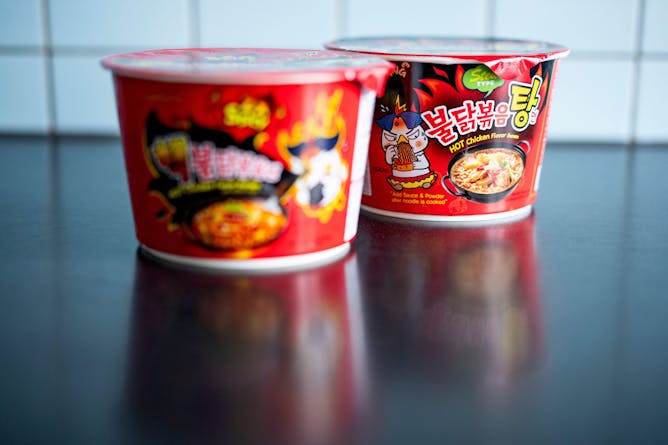 Mark Lorch, University of Hull Chillies only give the illusion of heat. Here's why the Dane's should chill out. | | |  Gemma Ware, The Conversation Nando Sigona and Michaela Benson argue Britain's Rwanda plan was brought about as a result of a Brexit-made policy failure. Listen on The Conversation Weekly podcast. | |  Víctor Climent Sanjuán, Universitat de Barcelona Pro-independence parties have slumped in Catalonia's recent elections, but is the dream of Catalan independence dead? |  Riccardo Rebonato, EDHEC Business School Climate modelling wields huge influence on governments and investors' decisions. Yet, researchers point out a lack of precision. | |  Stefan Wolff, University of Birmingham; Tetyana Malyarenko, National University Odesa Law Academy Volodymyr Zelensky and his friends in the west are failing to get support from the rest of the world for their demand that Russia completely withdraw from Ukraine. |  Gary Sinclair, Dublin City University The abuse heaped on players in high-profile matches is just the tip of the iceberg – a culture of online abuse permeates football at all levels. | |  Edurne Pasabán Lizarribal, IE University; Borja Santos Porras, IE University Nobody climbs Everest alone, and mountain expeditions can teach us a lot about how to work in a team. |  Olivia Thomas, Karolinska Institutet; Graham Taylor, University of Birmingham; Jill Brooks, University of Birmingham Our study provides new insights into the way that immune cells which fight a common virus behave in people with MS. | |  Natasha Lindstaedt, University of Essex Europe's far right parties are winning more backing in the polls, and will have increasing influence on policy over the Ukraine war. | | | | | | | | | | | | | | | | | |


0 comments:
Post a Comment