Last week Trump pulled his MAGA nominee for Surgeon General in favor of a wellness influencer who has never practiced medicine. It’s unclear if he pulled his original choice—Janette Nesheiwat—because she’s the sister-in-law of former National Security Advisor Mike Waltz (the only member of Trump 2.0 who kinda sorta faced repercussions for his actions) or because Laura Loomer didn’t like her. In a post on X, Loomer called her a “nepo appointee” and derided her for going to med school outside the United States. But Loomer’s primary complaint about Nesheiwat seems to be that she supported Covid vaccine efforts. (Side note: Trump instituted Operation Warp Speed to develop a vaccine, and his first administration should actually get some of the credit for how quickly it became available. Do you think if we’d called it the Trump Covid-19 Vaccine and packaged it in gold vials with tiny pictures of his face on the labels, we might have avoided the RFK, Jr. anti-vax invasion?) With Nesheiwat out, Trump nominated Dr. Casey Means who I like to refer to as MAHA Gwyneth (MG for short). MG went to Stanford Medical School and started her residency in head and neck surgery at Oregon Health and Science University. She dropped out just six months before finishing the five-year program. She’s made this fact work for her by saying she’d become disillusioned with the medical system, but let’s think about this for a second. She did four years of college, four years of medical school, and four-and-a-half years of residency and decided not to just finish it out? Put another way, she walked away from an $800,000 education with just a few months left? Even if her motives were pure and her disillusionment was real, this doesn’t scream “good decisionmaker” to me. Instead of becoming a head and neck surgeon, MG became a wellness influencer who mixes tidbits of science with large doses of bulls**t and comes up with miracle cures that may or may not make us healthy but will likely make her rich. Unlike the original Gwyneth, she’s not selling jade eggs or vaginal mungwort steamers. In 2019, the same year she dropped out of residency, she started a health tech company called Levels that offers blood tests and glucose monitors to people who do not have diabetes. The company’s primary product is a $40-per-month subscription service that will help you translate your data into a diet. Glucose monitoring is vital for people with diabetes, but research shows it offers no benefit to those who don’t have it. Our blood sugar is supposed to go up and down all day long and there’s no secret code hidden in the minute-by-minute numbers. (Actually, I hear that if you play the lottery with your blood sugar numbers from an hour after lunch every other Thursday, you’ll hit it big.) MG and her brother wrote a book last year that sadly made it to number one on the New York Times Best Seller List. They argue that “metabolic dysfunction” is behind all that ails us from obesity to schizophrenia to erectile dysfunction, and our bad diets are the root cause of it all. They write, “Almost every chronic health symptom that Western medicine addresses is the result of our cells being beleaguered by how we’ve come to live.” (Hmm? I often feel beleaguered, but I’m not sure it’s on a cellular level.) There’s a kernel of truth in there for sure. We don’t eat well. There are too many processed foods in our diets and too few that are naturally green. But the Means siblings quickly turn it into something actual science can’t support. First, they claim it’s all part of well-organized conspiracy by big food and big pharma (and maybe China) to get us all sick and keep us that way. They go on to suggest that the problem is as much a spiritual one as it is a medical one. And then, of course, they offer the solution in the form of recipes and supplements that they sell. For those of us who have no interest in reading the book, MG’s newsletter and frequent appearances on right wing podcasts offer us more accessible insights into her thinking. She’s a little woo-woo:
Okay, more than a little:
She’s not a fan of the pill. She said this on Tucker Carlson’s show:
She is a fan of raw milk (provided that she’s met the cow):
And she thinks we might get too many vaccines:
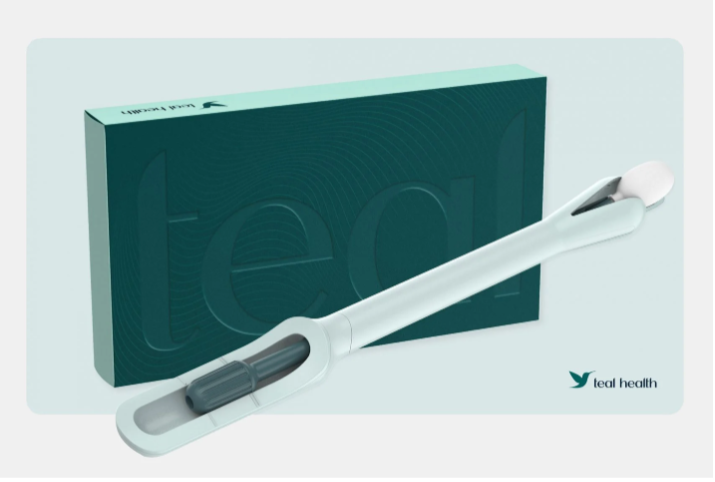
She’s also not convinced that vaccines don’t cause autism, but she doesn’t seem to care all that much. She’s all about the food we eat. Which is making the anti-vaccine MAHA base pretty angry. They see her nomination as signaling a move away from their cause toward the other things RFK, Jr. cares about like seed oils and food dye. And in a case of be careful what you wish for, Laura Loomer hates this nomination far more than she hated the last one. She called the nomination insane and embarrassing to the Trump administration and is convinced that it couldn’t have possibly come from her boy Donny. In an all-caps post on Truth Social, Loomer wrote, “PRESIDENT TRUMP’S PICK FOR US SURGEON GENERAL CASEY MEANS SAID SHE PRAYS TO INANIMATE OBJECTS, COMMUNICATES WITH SPIRIT MEDIUMS, USES SHROOMS AS ‘PLANT MEDICINE’ AND TALKS TO TREES! SHE ALSO DOESN’T EVEN HAVE AN ACTIVE MEDICAL LICENSE.” (Let’s all just pretend we didn’t just agree with Laura Loomer, it will be better for our collective self-esteem.) Those of us who care about public health are also pretty angry about this nomination. The Surgeon General’s job is to be the face of health messages—whether that’s the dangers of tobacco, how to prevent HIV, why it’s important not to drink during pregnancy, the need for teen mental health care, or—you know—how to survive an pandemic. We all need to eat healthier, but replacing Ritz crackers with all-seed Flackers (see this funny article in Slate) is not actually going to cure cancer, end Alzheimer’s, or protect us from the next SARS virus. MAHA Gwyneth’s focus on food makes her very similar to the Original Gwyneth who prided herself on subsisting on air and bone broth for decades. But in what can only be described as the latest sign of the apocalypse, we have recently learned that our very own Goop goddess is eating cheese and… wait for it… bread again. She’s even had a little pasta. Now You Can Go Swab Yourself, At HomeThe FDA just approved the Teal Wand, a self-collection device for HPV testing that does not require a speculum exam or even a trip to the doctor’s office. Cervical cancer screening is important because it can catch the disease so early that it’s not even cancer yet, but screening rates have been dropping. At-home tests may help turn that around. Unfortunately, there is some confusion about what tests people need and when and the way the media covered this new development likely didn’t help. Once upon a time, cervical cancer screening needs were easy to understand. As soon as you became sexually active or turned 18 you got a Pap smear every year. Hell, it even rhymed. The Pap smear—named after George Papanicolao, the doctor who developed it in the 1940s was a remarkable invention. It takes cells from the surface of the cervix and uses a microscope to determine if they are cancerous or have undergone precancerous changes. Widespread use of the Pap smear in this country is a large part of why cases of cervical cancer dropped 70% and deaths from the disease dropped 50% since the 1970s. The Pap got a name change in the mid-1990s when liquid-based cytology was introduced. Instead of your clinician literally smearing cells from your cervix on a slide, they started to put the specimen into a test-tube with liquid. The screening became more accurate, but the name no longer was. So now we call it a Pap test. (I miss the word smear: it’s so visceral, almost onomatopoeic.) Then in the early 2000s, the Pap got a friend (though some might call it a competitor). In the years since the Pap was invented, we’d learned that almost all cases of cervical cancer are caused by the Human Papilloma Virus (HPV). In fact, we learned that there were two types of that virus—16 and 18—that were the culprit in more than 90% of cases. And then scientists (because back before the turn of the century, we still liked science) were able to invent a test that looked for those two types (and some others). The HPV test was similar to the Pap in that a clinician used a speculum to separate the walls of the vagina and a brush to collect a specimen from the cervix. If you tested positive for those strains of HPV, you were at risk of developing cervical cancer and might need more tests and/or more constant monitoring. If you tested negative, you could consider yourself in the clear for a little while. The invention of the HPV test and a better understanding of how cervical cancer develops led experts to decide that a yearly pap was not necessary. What experts couldn’t agree on was whether HPV testing should supplement the Pap in some people, replace the Pap as the go-to cervical cancer screening for everyone (a strategy that came to be known as HPV primary), or always be given as part of the pair (known as co-testing). The resulting schedule of who gets which test when can be a little confusing. (A colleague and I once tried to make a flow chart and gave up when there were just too many boxes and arrows.) Here's the deal as it stands today:
Until recently, all of these tests were essentially conducted the same way—in stirrups, with a speculum, and a health care provider’s face between your legs. Last year, the FDA approved the first self-collected HPV test. The test still had to be given in a health care setting, but the provider didn’t need a front row seat. They’d give you a kit and a private space and let you swab yourself. This was a big step forward because it meant that HPV tests were no longer limited to OB/Gyn offices. It opened up the possibility of cervical cancer screenings at primary care offices, urgent care centers, emergency departments, and mobile care vans, among other places. With the approval of the Teal Wand, we now can add your very own home to the list. The wand is pretty cool. It was designed to be used one-handed. It has a handle, a sponge at the top, and a dial at the bottom that spins the sponge. With self-collection, you have to get cells from the top of your vagina, but they don’t have to be from the cervix. You put the wand in your vagina and push it up until your feel a little resistance. Then you use the dial to spin the sponge. The sponge detaches from the unit and you send it to a lab for results.
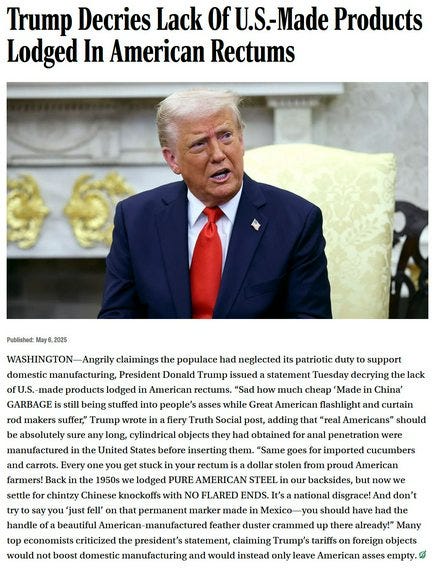
The SELF-CERV study looked at the Teal Wand specifically. It included over 600 participants who had a clinician collect a sample during a speculum exam and collected their own sample using the new device. The study found that over 98% of participants collected a valid sample and in 95% of cases the results were the same as those from clinician-collected samples. It also found that 93% of people thought the device was easy to use and 94% preferred it to having the clinician collect the sample. (Not surprising given that the speculum still looks a little like a medieval instrument of torture.) The introduction of self-collected tests, however, may add yet another complication to the flow chart that is cervical cancer screening recommendations. If the USPSTF (the task force that makes recommendations on preventative care) still exists later this year, it might decide that people who use self-collected samples for the HPV tests need to test more often than people who brave the speculum. Given the potential for confusion, I was disappointed that so many headlines about the Teal Wand said something like, “The FDA approves first U.S. at-home tool as a Pap-smear alternative.” It’s not inaccurate but it doesn’t help with the confusion about which is which and when’s what. That said, more options are great regardless of what they’re called. And being allowed to swab your own vagina in your own home will hopefully cast a wider net that includes people who lack transportation, can’t take time off, or try to avoid a speculum exam with the same level of determination that I use to avoid the dentist (yet again, I’m overdue for a cleaning). Teal Health will start distributing its wand in California next month and hopes to keep expanding to other states. Since you need a prescription for the screening, the company will be offering a telehealth option. Self-collection is not recommended for anyone who is pregnant, has had treatment for cervical precancer in the past, is HIV-positive or otherwise immunosuppressed, or has a history of cancer of the reproductive system. The Onion Nails It (Pun too Obvious)Thank you to all the people who sent me The Onion headline, “Trump Decries Lack Of U.S.-Made Products Lodged in American Rectums.”
Our annual review of things we shouldn’t have stuck up our asses is always one of the most-read posts of the year. If you missed it or can’t wait until next year to read about people’s anal fixation and stupidity, check out “Things We Voluntarily Stuck Up Our Asses: And a Few That Are Being Shoved For Us,” which I published two days after inauguration. I’m admit I have no idea if the scrub brushes, wire hangers, toilet paper holders, or xylophone mallet that made the 2024 list were made in the U.S. or not. It never occurred to me to care. Possibly because I’m not a racist narcissist or possibly because from a sex educator ass-play-is-cool-but-don’t-stick-anything-without-a-flared-base-up-there-or-it-could-get-lost perspective, it really doesn’t matter. Sex on Wednesday is free today. But if you enjoyed this post, you can tell Sex on Wednesday that their writing is valuable by pledging a future subscription. You won't be charged unless they enable payments.
|
MAHA Gwyneth






0 comments:
Post a Comment