
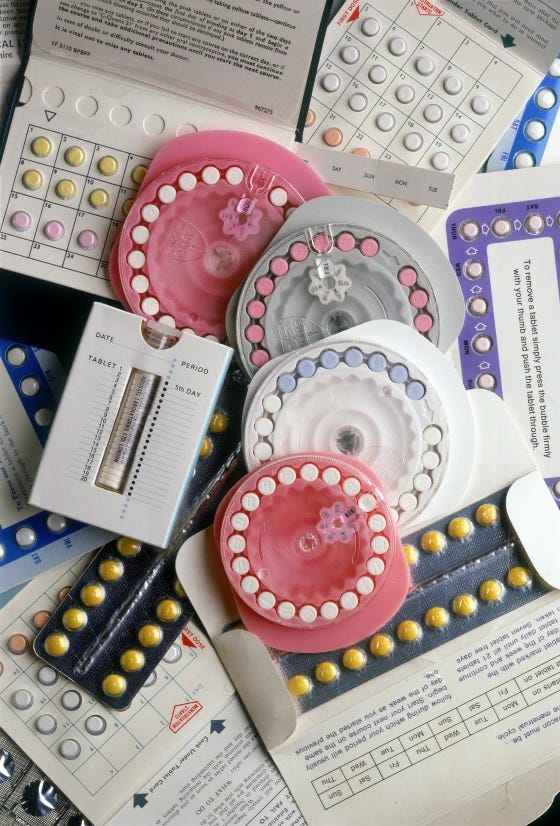
We’re all getting screwwormed by the Trump Administration’s inability to handle our money. There are so many examples from this week alone, even if we don’t look at the awful deal with Iran. There’s the revamp of the reflecting pool which cost $14 million and is now bright green with algae (which will presumably cost even more to clean up). There’s the big, beautiful ballroom which internal documents budget at $600 million ($200 million more than Trump has said publicly). There’s the $100 million dollars we’re now spending to re-eradicate screwworm, a parasite that infects livestock and pets. We mostly got rid of this pest in 1966 and haven’t seen a new domestic case since 1980. But then the USDA got DOGED. Snopes was unable to confirm whether DOGE directly cut the screwworm project, but it seems safe to say that this is the kind of thing that happens when you slash federal budgets and fire federal employees without understanding what they actually do. (But hey, Elon Musk is now officially a trillionaire so he must be good with money.) Now we’re learning that the Trump Administration is still paying to store a whole bunch of contraceptives—some of which are still viable—because Bible thumping is more important than budgeting. In July 2025, the State Department confirmed that they were planning on destroying $9.4 million of perfectly good birth control pills and IUDs. The methods were originally going to be distributed by USAID in low-income countries where they could have prevented millions of unintended pregnancies. Okay, the State Department didn’t acknowledge that last part, but it did admit to a plan to literally set the contraceptives on fire.
Why? Because this administration ascribes to the scientifically false belief that certain birth control methods cause abortion. A state department spokesperson referred to the products as “certain abortifacient birth control commodities from terminated Biden-era USAID contracts.” All together now: That’s not how it f**king works. Birth control works before you get pregnant. Abortifacients work after. Abortifacient birth control isn’t a thing. (Here’s one of my many pieces on this if you want the science behind it.) So they wouldn’t distribute these methods, and they wouldn’t donate them to any one of a number of organizations that offered to buy them. But they also didn’t actually set them on fire. At one point last year, they paid for 24 trucks to come and get the supply and move it to Belgium (at a cost of who knows what). Those trucks were not temperature controlled, which means that most of the contraceptives (about $8 million worth) can no longer be used. Nonetheless they continued to be stored—along with $1.7-million-dollars-worth of usable items like syringes—at the low, low price of $24,550 a month. At this point it seems like the Trump Administration is content to pay the monthly bill in perpetuity. The order to destroy the contraceptives has been rescinded, but the government has not responded to a plan to donate the remaining shelf-stable equipment to Uganda. In fact according to Reuters, the State Department hasn’t had any contact with Belgium on this issue in about four months. Look at it this way: now you don’t have to feel so bad about the U-Haul Storage locker you’ve been renting for the baseball card collection that you told your wife you already sold. Does Age of First Sex Affect the Aging Process? Do We Really Care?Back in the days of abstinence-only-until-marriage programs, the Far Right used to tell kids not to have sex because if they did they’d get pregnant, catch an STI, become damaged goods, and never have a decent relationship. The goal, of course, was to scare kids out of doing it. One thing they never warned kids about, however, was the potential impact that having sex at an earlier age might have on your long-term longevity and the natural aging process. I guess that one didn’t translate easily into a “game” that used spit, tape, or plucked roses to illustrate the sullying of a once-pure girl. Or maybe the authors of Choosing the Best, W.A.I.T. (Why Am I Temped) Training, and Sex Respect—who were perfectly happy to lie about birth control effectiveness and use bogus studies on oxytocin to claim sex permanently ruins your ability to bond—thought that connecting age at first sex to your health in old age was as a stretch. Yet we now have a study that says just that. Researchers in China surveyed over 350,000 people in Britain about when they first had sex, genetic factors (like how long their parents lived), lifestyle factors (like whether they are active or sedentary), and cognitive skills (like whether they could pass the test Trump keeps taking even though there’s nothing wrong with his brain). The researchers then performed a Mendelian randomization (MR) analysis. This kind of analysis looks at “the causal effects of modifiable exposures (i.e., potential risk factors) on health, social, and economic outcomes using genetic variants associated with the specific exposures of interest.” The authors believe this method is applicable because age at first sex can be modified with proper sexual education. I will not pretend to understand their analysis, but aging is complicated. How well we age is based on our physical, psychological, social, and economic state, as well as a little bit of luck (to have—say—not been hit by a bus in our 40s). The age you first have sex is also based on those things (except maybe the bus). Untangling that and then trying to draw a line between them seems difficult. It’s easy to connect teen pregnancy and STIs (especially untreated STIs) to our health as we age, but not all teens who have sex early experience these issues despite what the abstinence-only crowd was peddling. We can also easily connect early onset puberty to earlier sexual behavior because these go hand-in-hand. We know that people who enter puberty early are more likely to have sex early, and we also know that being exposed to sex hormones over a longer period of time can have implications for your body. So, in that way early sex could be physically linked to aging issues. But wouldn’t those aging issues really be the fault of the hormones that triggered early puberty and not the awkward romp between Chemistry lab partners during high school? The study found a link between early age of first intercourse and “frailty index, miserableness, chronic obstructive pulmonary disease, and attention-deficit/hyperactivity disorder.” The lead author explained, “This may be attributed to elevated risks of unintended pregnancies, sexually transmitted diseases, substance abuse, and physical health conditions during adolescence and adulthood, which are closely linked to earlier sexual intercourse, and can significantly compromise life expectancy and elevate aging-related vulnerabilities.” Again, does this mean that sexual activity was the issue, or might it be the substance abuse, unintended pregnancy, STIs, and physical health conditions? Moreover, all of these issues are related to social determinants of health like neighborhood, education, income, and access to health care. We already know that these factors have a huge impact on a person’s overall health and lifespan. I’m not going to challenge their analysis because I do not speak Mendelian randomization, but I’m having a hard time believing that we can untangle these issues enough to say that whether you first had sex at 14 or 18 makes any difference. I question the premise of the study and the need for it. The authors suggest that “the long time span between AFS [age at first intercourse] and aging raises an urgent question: how AFS may exert indirect long-term effects on late-life aging through multiple pathways in the complex life trajectory?” An MSN article about the study says, “However, how this experience influences you much later in life has remained a mystery.” But is this an urgent question or a mystery that anyone has been dying to solve? Or is this just another way to look at teen sex as harmful? (And we know that harmful is just a hop, skip, and a jump away from shameful.) The authors do not seem to be taking an abstinence-only-until-marriage approach to this research (perhaps because they’re not mired in a uniquely U.S. Far Right context). They say they want to implement early sexual health education as a way to foster healthy sexual attitudes and promote healthy aging. That’s sounds good at first, but the authors also say that the goal of such programs would be getting teens to delay sexual initiation. That’s not a goal I can really get behind. As I said last week, I think teens should have sex (with fellow humans) and experience all the ups and down that go with that. I don’t think telling kids not to have sex at 17 because they’ll be frailer than their neighbor when they’re 77 is any better than telling them that they shouldn’t have sex at 16 because they’ll inevitably get pregnant. Our goal should be to tell them how not to get pregnant (contraception) and how not to get frail (not my area of expertise but I’m guessing a balanced diet and some weight training). Oh, and maybe throw in something about not getting hit by a bus. Sex on Wednesday is free today. But if you enjoyed this post, you can tell Sex on Wednesday that their writing is valuable by pledging a future subscription. You won't be charged unless they enable payments.
|






0 comments:
Post a Comment