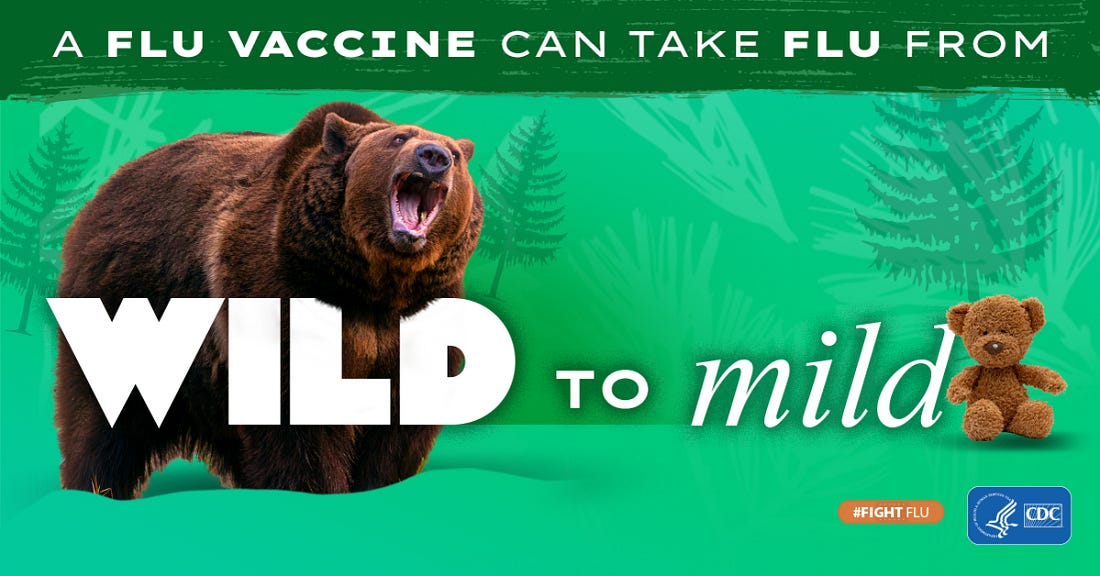
Last week, when an unvaccinated child in Texas died of the measles, our new Secretary of Health downplayed the death and got his facts wrong. RFK Jr. said measles outbreaks were “not unusual” and that the hospitalizations were “mainly for quarantine.” He’s wrong on both counts. Before Kennedy and his Children’s Health Defense buddies began spreading misinformation about the MMR and other vaccines, the U.S. went years without any significant measles outbreaks. In fact, we declared the disease officially eradicated in 2000. That progress is slowly being undone as more and more parents buy into the bulls**t people like Kennedy are spreading and skip vaccines. Still, this is the first measles-related death since 2015. Public health experts in Texas and New Mexico, where this current outbreak is most concentrated, were quick to tell Kennedy that he was also wrong about hospitalizations. Though the number of people admitted to the hospital with measles is low (20 as of last Friday), they are not there as part of isolation measures. Dr. Lara Johnson, the chief medical officer of Covenant Health Lubbock Service Area, told CNN: “Quarantine is not something that would happen in a healthcare facility. We admit patients who need acute supportive treatment in our hospital.” (Read: “That’s not how it f**king works!”) Johnson went on to say hospitalized patients needed supplemental oxygen and other respiratory support. Oddly—for someone who was trying to minimize the situation—RFK Jr. said there had been two deaths when only one has been reported. Over the weekend, RFK Jr. published a think piece (I use that term loosely) on Fox News that some say represented an about-face on vaccines. Headlines include “RFK Jr. urges measles vaccinations after years of casting doubt on the vaccine” and “Vaccine critic RFK Jr. backs measles vaccine amid deadly Texas outbreak.” I read his piece and that’s not what I heard him saying at all. Okay, fine he did write, “Vaccines not only protect individual children from measles, but also contribute to community immunity, protecting those who are unable to be vaccinated due to medical reasons.” This was used as a pull-quote which is great since the Fox News audience needs to hear it. But the point is undermined before it’s made because Kennedy starts the paragraph with, “All parents should consult with their healthcare providers to understand their options to get the MMR vaccine. The decision to vaccinate is a personal one.” That’s not “get vaccinated,” that’s “think about getting vaccinated.” It’s also not, “do it for your community.” Later in the article, Kennedy seems to undermine the vaccine’s role in prevention. First he notes that “By 1960—before the vaccine’s introduction—improvements in sanitation and nutrition had eliminated 98% of measles deaths.” While that may be true, death isn’t the only concern with the measles. About 1 in 20 kids who get measles will develop pneumonia and 1 in 1,000 will develop brain swelling that can lead to deafness or intellectual disabilities. We may have brought the death rate down by 1960, but we still had 200 cases per every 100,000 people in this country. Compare that to 0.030 cases per 100,000 in 2000, the year we declared the measles all gone. But don’t worry about that. Worry about what you’re eating. Kennedy’s op-ed goes on to remind everybody that the best thing they can do is eat a balanced diet. Okay, Junior, that may be true when we’re talking overall health, but amidst a measles outbreak vaccines are more important than broccoli. (Someday, we might also have to ask him about his plan to make this cure-all nutritious diet available to all, but it looks like Congress is going to cut already woefully inadequate SNAP benefits before we have a chance to debate Bobby on that one.) Kennedy used his op-ed as a call to action, but headlines saying it was a call to action to vaccinate were wrong. He said, “The measles outbreak in Texas is a call to action for all of us to reaffirm our commitment to public health.” In the past, the phrase public health might have been synonymous with vaccines, but last week HHS cancelled the annual flu vaccine meeting. This gathering of advisors—who use, you know, science, to determine which strains of flu are most likely and should be included in next season’s vaccine—has taken place each year since the 1960s. The email abruptly cancelling the meeting did not include any indication that it would be rescheduled. In other anti-vax news, the CDC cancelled a long-running vaccine promotion campaign called “Wild to Mild.” The campaign was started in the fall of 2023 following high rates of flu-associated deaths in unvaccinated children. The goal was to correct the misunderstanding that the flu vaccine is a failure because “my kid got the flu anyhow.” The campaign included a series of graphic images of wild animals next to their cute/domesticated counterparts to show that the purpose of the vaccine is to take infection from “wild” to “mild.”
Public health is expert advisory panels on flu vaccines and cute pictures of lions and house cats. But RFK Jr. is committed to neither of them. He is, however, a big fan of Vitamin A and cod liver oil. In a pre-recorded interview that aired on, you guessed it, Fox News on Monday, her said that HHS was shipping vitamin A to Texas because doctors has seen “very, very good results” with that among other treatments. He also suggested giving kids cod liver oil. (A special kind of torture that should stay stuck in the past.) There is some evidence that vitamin A can help with the measles, especially in locations where malnutrition is common, but the American Association of Pediatrics warned parents not to give it to their children in the hopes of preventing or curing measles. In high doses, vitamin A can cause vomiting, blurry vision, liver failure, and coma. (Take a minute to think about the fact that the AAP had to warn people not to follow the Secretary of Health’s advice.) What RFK Jr. did not mention in his on-air interview was vaccines. My dad was given cod liver oil every day as a child because he was bow-legged. He still remembers how gross it was. You know what else he remembers? Classmates dying of polio. He also remembers getting that first vaccine and what a miracle everyone thought it was. These infectious diseases that killed some children and crippled others should not be problems today. Science and public health fixed them, and now politics and stupidity are bringing them back. (See next story for how this all relates to sex. I promise it does.) 80% Reduction in Cervical Precancers Thanks to the HPV Vaccine (The One RFK Jr. is Suing) Guess what? The HPV vaccine works. We already knew that because HPV rates have dropped and cervical cancer rates are steadily declining. Now, a new study shows a dramatic drop in the rates of cervical precancers among young adult women. This is good news that everyone other than RFK Jr.—who is part of lawsuits against the maker of the vaccine—should be celebrating. As we all know by now, HPV is a group of over 100 different types of viruses. Some types of HPV can cause genital warts and other types—referred to as high-risk types—can cause cancer of the cervix, vulva, vagina, penis, or anus, as well as cancer in the back of the throat. (Actually, another new study suggested that we didn’t all know the part about oral cancers, but now you do.) HPV is so contagious that nearly all sexually active people will contract it at some point in their lives. In most cases, the body clears the HPV infection before you even know you have it. But persistent infections with high-risk types can lead to cancer. The HPV vaccine was introduced in 2006. The original version protected against four types of HPV—those most likely to cause genital warts and those most likely to cause cancer. An updated version released in 2014 protects against nine high-risk types. The vaccine is recommended as part of the routine immunizations given at age 11 or 12. Not because anyone thinks your sixth grader is or should be sexually active, but because the goal is to get kids vaccinated before they’re ever exposed to the virus. Moreover, younger kids have been shown to have a great immune response to the vaccine. If they get it before they’re 15, they only need two shots (as opposed to three for older teens and adults). Originally, the vaccine was only recommended for girls and young women and you could only get it until age 26. Today, it is recommended that everyone regardless of sex or gender be vaccinated. The vaccine is approved for use from age 9 through age 45. As I said, we already know the vaccine is working. Infections with the types of HPV that are most likely to cause cancers and genital warts have dropped by 88 percent in teen girls and 81 percent in young women. Cervical cancer rates have also been dropping since the introduction of the vaccine. Rates for women ages 20 to 24 declined 11% each year between 2012 and 2019. This is the age group most likely to have gotten the vaccine before they were sexually active. The new study looks at cervical precancers. Cervical cancer develops gradually as cells experience abnormal changes. These changes can be detected through pap tests which take swabs of cells from the cervix and examines them under a microscope. (The official name for this type of testing is cytology.) These tests can detect abnormal cell changes—sometimes called cervical dysplasia—long before they become cancer. There are treatments that can prevent cancer from ever forming. This is why screening is so important. Precancers are classified by severity or likelihood of becoming cancer. Mild cases are classified as CIN1 and usually do not require treatment because the body can clear these mild changes on its own. More severe cellular changes are classified as CIN2 and CIN3. These are more likely to become cervical cancer if not treated. Some people with CIN2 are treated while others are monitored closely to see if the abnormal changes persist. Most people with CIN3 receive treatment to prevent the changes from becoming cervical cancer. The new study found that rates of CIN2 and CIN3 have fallen dramatically especially among the youngest women. Between 2008 and 2022, rates of CIN2 precancers fell 79% among young women who were 20 to 24 at the end of the study period. During that same time rates of CIN3 precancers among this group fell 80%. Rates also dropped among older women. Those who were 25 to 29 in 2022 saw a 37% drop in CIN3 precancers. Remember, people who were 20 to 29 three years ago, were pretty damn young (under 13) when the vaccine came out and had a good chance of getting it before they became sexually active. In contrast, precancer rates rose among women who were 40 to 49 and 50 to 64 in 2022. These women would have been between 24 and 48 when the vaccine was first introduced which means most of them missed the window for vaccination. If they were vaccinated, it was likely after they’d become sexually active. The study was published in the CDC’s Morbidity and Mortality Weekly Report, which seems to have been taken off of the no-fly list for now. I wonder, however, if studies like this that could have a direct impact on RFK Jr.’s bank account will change that. (Oh wait, it will have a direct impact on RFK Jr.’s bank account because enriching a close family member is never a conflict of interest.) Flora Offers Insurance for Future InfertilityIVF has been in the news a lot lately. It started last year when the Alabama Supreme Court declared frozen embryos to be children covered by the Wrongful Death of a Minor Act of 1872. This opened the door for couples to sue clinics for any number of scenarios in which an embryo was destroyed. In response, most clinics in the state paused all services. The state legislature was able to rectify the situation in Alabama quickly, but the absurdity of referring to frozen embryos as children became a way for Democrats to point out that pro-fetus isn’t always pro-family. This was awkward for Republicans who have long pretended to be both. Donald Trump seized on the issue. In a presidential debate he called himself “a leader on fertilization.” Later, on the campaign trail, he promised to bring down the cost of IVF by “making your insurance company pay for it.” Even if we forget for a second that this guy spent much of his first term trying to dismantle the ACA because it made insurance companies pay for too much, this came across as an expensive promise that he had no intention of keeping. (I always use the candidate for 5th grade class president who promises free coke in the cafeteria as an analogy, but it’s getting tired. Got a new one for me?) Now, as the actual president, Trump put that promise in the form of an executive order. Only it doesn’t mean much. The order was a great photo-op but merely says that an undersecretary of health has to come up with some ideas of how we might, maybe, someday make infertility treatments more affordable. Sounds great, but about as likely as seven periods of recess every day. In the meantime, I spoke to the leaders of Flora, a new company that is trying to make infertility treatments more affordable and accessible by offering a separate insurance plan. The model is simple: pay a monthly fee (based mostly on how old you are when you purchase the plan) and gain access to $50,000 of coverage. It’s insurance in its most basic form—less money now just in case you need a lot of it later—but the founders tell me it’s more than that. They see it as a community of women helping each other. I spoke with Laura McDonald and Dr. Christy Lane, the co-founders of Flora. Here’s how they explained it:
Having just gone through a major homeowner’s snafu that ended with me being insured by Lloyd’s of London (like I’m Mariah Carey’s legs or Barbra Streisand’s nose), I had a lot of questions about how it all works. Here’s a bit of my conversation with the founders of Flora:
We know Donald Trump is capable of fertilization because he knocked up wife two while still married to the first one, but his executive order is as meaningless as his campaign promise to bring down the price of eggs. I’d much rather put my faith in female founders. Check out Flora at www.heyflora.co. Sex on Wednesday is free today. But if you enjoyed this post, you can tell Sex on Wednesday that their writing is valuable by pledging a future subscription. You won't be charged unless they enable payments.
|
Vaccines are Better Than Broccoli






0 comments:
Post a Comment